
Our Approach to Multiple Births and IVF
Prioritizing the health of both mother and child through evidence-based embryo transfer strategies.
At VCRM, we take the issue of multiple births very seriously. While many couples mistakenly view twins as an ideal "two-for-one" outcome, reproductive endocrinologists and maternal-fetal medicine specialists do not share this enthusiasm. Twins are not simply twice the fun—they present substantial obstetric, neonatal, and long-term developmental complexities, as any parent of twins can attest.
Our clinic strives diligently to limit the occurrence of twins and completely eliminate higher-order multiples (triplets or more) using state-of-the-art techniques such as blastocyst culture, time-lapse embryo imaging, PGT-A genetic screening, and the rigorous implementation of Elective Single Embryo Transfer (eSET).
“Sufficient unto the day is one baby. As long as you are in your right mind don’t you ever pray for twins. Twins amount to a permanent riot; and there ain’t any real difference between triplets and an insurrection.”
— Mark Twain, The Baby Speech (1879)Understanding Twin Gestations in IVF
Balancing high pregnancy success with maternal-fetal safety.
Conception of a twin gestation is a possibility in assisted reproductive treatments whenever more than one embryo is transferred. While twin births are widely celebrated, twin pregnancies carry significantly higher risks of premature labor, preeclampsia, gestational diabetes, placental abruption, low birth weight, and prolonged neonatal intensive care unit (NICU) admissions.
Techniques of extended blastocyst culture practiced in our cleanroom IVF laboratory have substantially reduced multiple conception rates without sacrificing a patient’s overall cumulative chance of bringing home a baby. In selected cases where twins present acute maternal health risks, single blastocyst transfer is essential.
Singleton Pregnancy (Goal)
Lowest risk of prematurity (avg. 39–40 weeks), optimal birth weight, reduced maternal complications, and highest long-term health outcomes.
Twin Gestation (High Risk)
Over 60% born preterm (<37 weeks), 50% low birth weight (<5.5 lbs), 4x risk of preeclampsia, and substantially higher rates of C-section delivery.
High-Order Multiples (Triplets or More)
Eliminating dangerous higher-order pregnancies through precise laboratory protocols.
A high-order multiple pregnancy consists of three or more developing fetuses. While the rare delivery of triplets or quadruplets occasionally makes headlines in the popular press, the reality is that the vast majority of high-order gestations end in severe prematurity, lifelong neurological or pulmonary disabilities, or tragic pregnancy loss.
When determining the exact number of embryos to recommend for transfer, Dr. Fady Sharara carefully evaluates embryo stage, morphological quality, genetic euploidy status, maternal age, and previous IVF history. Our practice's goal is to keep the incidence of high-order multiple pregnancies at zero.
Elective Single Embryo Transfer (eSET): The Modern Standard
Unmatched safety with industry-leading live birth rates.
We strongly believe the true solution to the multiple pregnancy epidemic in IVF is the universal implementation of Elective Single Embryo Transfer (eSET).
With modern day-5/day-6 blastocyst culture and Preimplantation Genetic Testing for Aneuploidy (PGT-A), transferring a single genetically normal embryo delivers the same high pregnancy rate as transferring multiple embryos, but with less than a 1% risk of identical twin splitting and 0% risk of triplets. Remaining high-quality blastocysts are safely cryopreserved via vitrification for future frozen embryo transfers (FET).
Multifetal Pregnancy Reduction
Compassionate maternal-fetal medicine counseling for high-risk multiples.
Multifetal reduction (selective fetal reduction) is a specialized procedure performed by a perinatologist (maternal-fetal medicine subspecialist) at 11–12 weeks of gestation when a high-order multiple pregnancy occurs. Selectively reducing triplets or quadruplets to twins significantly improves gestational age at delivery and protects maternal health. While high-order multiples are virtually non-existent under VCRM's strict eSET protocols, our team provides comprehensive, empathetic medical guidance and referrals should this complex situation ever arise.
Frequently Asked Questions About Multiple Births in IVF
Clear answers to common questions about embryo numbers, twin risks, and eSET.
Can a single embryo transfer still result in twins?
Yes, in rare cases (approximately 1% to 2% of transfers), a single blastocyst can split after transfer to create identical (monozygotic) twins. However, eSET completely prevents fraternal (dizygotic) multiples.
Does transferring two embryos double my chance of pregnancy?
No. Studies consistently show that transferring two embryos at once only marginally increases the pregnancy rate per transfer while drastically multiplying the risk of twin complications. Performing two separate single embryo transfers yields a higher cumulative live birth rate with maximum safety.
What are ASRM guidelines on the number of embryos to transfer?
The American Society for Reproductive Medicine (ASRM) recommends elective single embryo transfer (eSET) for all patients under 35, patients using donor eggs, and patients with euploid genetically tested embryos regardless of age.
What happens to the extra embryos from my cycle?
Extra high-quality blastocysts are cryopreserved using ultra-rapid vitrification in our laboratory. They can remain securely frozen for years, allowing you to expand your family in the future through simple frozen embryo transfers without repeating ovarian stimulation.
Safe IVF Deliveries
Our elective single embryo transfer protocols provide industry-leading pregnancy rates while protecting mothers and infants.
Book ConsultationIVF Treatment & Science
Medical Director
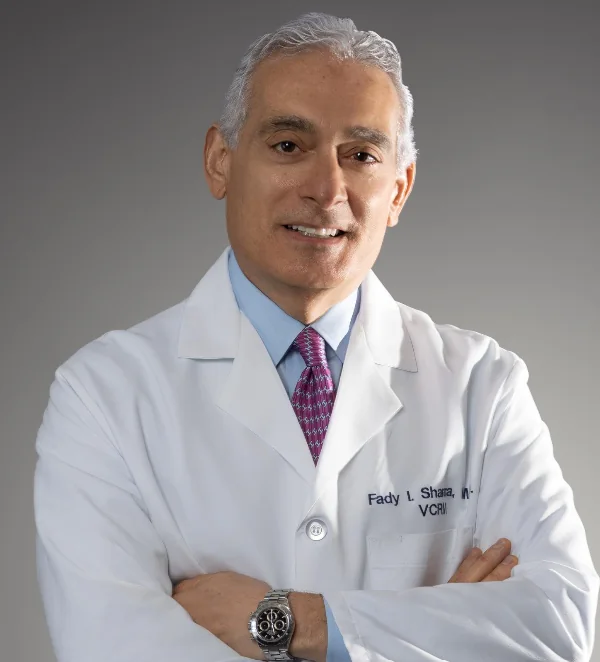
Dr. Fady Sharara
M.D., FACOG • Board Certified REIPioneering single embryo transfer protocols to achieve national benchmark live birth rates with minimal multiple gestation rates.
Read Full BiographyReston, VA Clinic
Virginia Center for Reproductive Medicine
11150 Sunset Hills Rd #100
Reston, VA 20190
Serving Washington DC, Maryland & Northern Virginia.
Get Directions